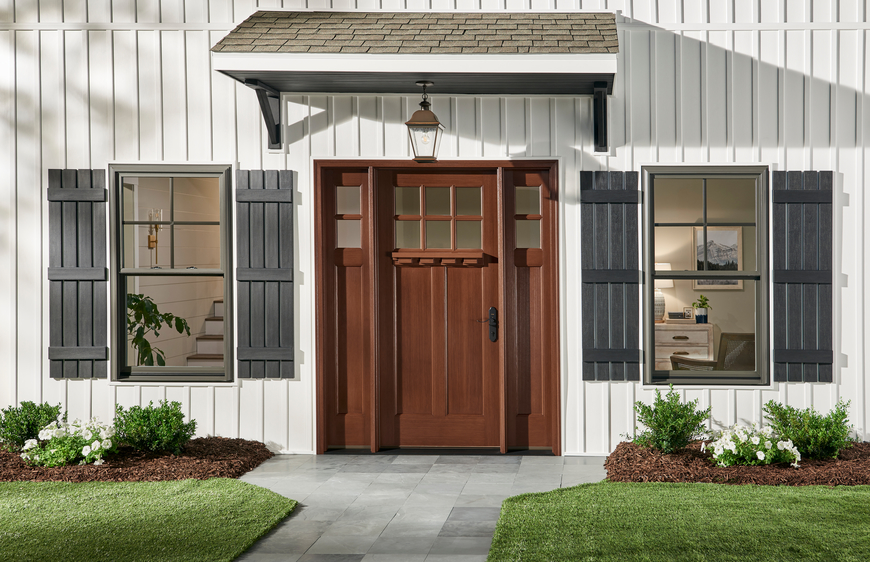
From installing solar panels to choosing LED light bulbs, there are a lot of ways to increase your home’s energy efficiency. Replacement doors are a great way to boost your home’s curb appeal, while making your home more eco-friendly and comfortable.
If you’re not sure what to look for in an energy-efficient door, our home improvement experts are here to help! Keep reading to learn the benefits of installing energy-saving doors and how to choose the most efficient exterior doors for your home.
Why Install Energy-Efficient Doors?
There are several benefits that come with installing energy-efficient doors. Most people love that new doors update the look of their home, increase their curb appeal, and add to their home’s value. The benefits are much more than just cosmetic, though!
Energy-efficient, or insulated doors allow you to save money on your energy bills every month by providing a tighter seal against the elements and keeping your heat/AC inside where it belongs. In addition to lower electric bills, you’ll notice your home’s temperatures are more consistent and comfortable year round.
What Makes Doors Energy-Efficient?
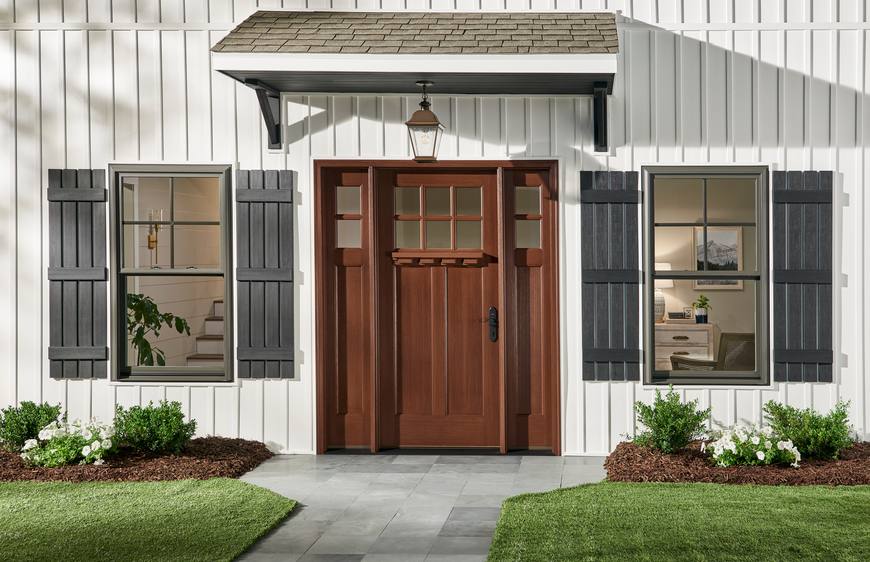
Not all doors are created equally and there are a lot of doors that aren’t exactly energy-efficient. The door’s material, core, and glass options all determine its energy-efficiency. These materials work together to reduce heat flow and air leakage in doors. It’s worth noting that Window World’s doors are built with these superior materials and the latest technology.
It’s not just guesswork, though. Building materials and finished products like doors have their energy efficiency measured with ratings called U-factor and R-value.
U-factor measures the rate at which heat flows through the door. The lower the U-factor, the more energy-efficient an item is. In Connecticut, your door should have a U-factor of at least .27.
A product’s R-value determines how well it insulates. The higher the R-value, the better it is at insulating. Nationwide, the range for acceptable R-values is much wider: it just needs to be between 13 and 21.
These values work together to determine whether a product meets the criteria for Energy Star Certification, indicating that it is a top performer when it comes to energy efficiency.
Let’s talk about Energy Star Certification for doors and how each component contributes to its energy efficiency.
Energy Star Doors

At Window World, we’re proud to sell and install a wide variety of doors, all of which have earned the Energy Star certification. To earn the Energy Star certification, doors must have a certain U-factor.
A door’s energy efficiency is based on the amount of glass the door has. Entry doors typically don’t have glass, and if they do, it is minimal. To earn the Energy Star rating, a door with little to no glass must have a U-factor less than or equal to 0.17. A door that has a lot of glass, like a sliding patio door, needs to have a U-factor of less than or equal to 0.30 to earn the Energy Star label.
Comparing the Energy Efficiency of Different Doors
The material a door is made out of, and the insulation inside, plays a big part in its energy efficiency. Fiberglass, aluminum, and wood are the most common materials for entry doors and, with the exception of wood, any of these doors can be insulated or uninsulated.
Let’s look at the energy efficiency and overall durability of each of these materials.
Fiberglass
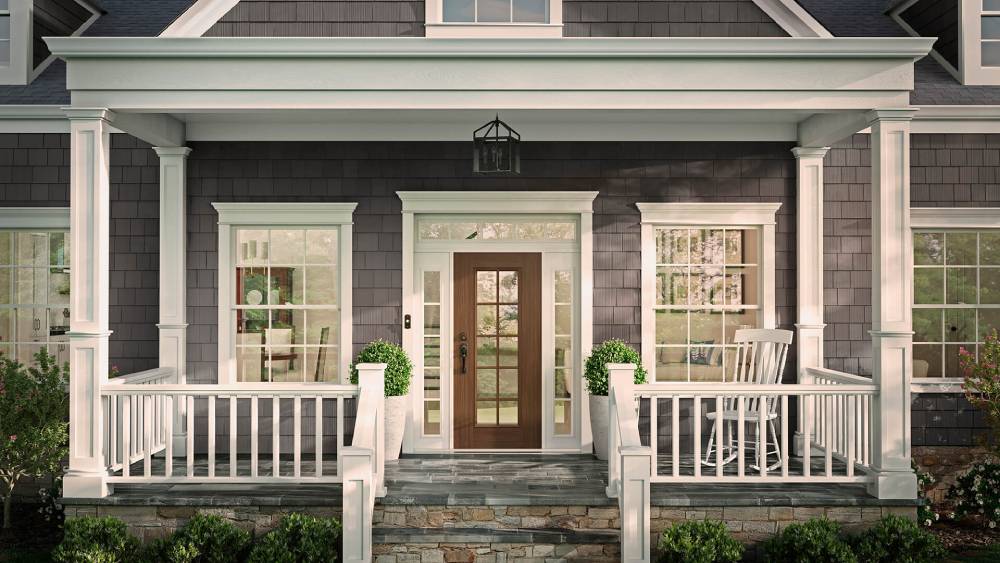
Fiberglass exterior doors are among the strongest on the market. They’re also some of the most energy-efficient. Fiberglass is a poor conductor of heat, making it energy-efficient on its own, but when insulation is added, it’s hard to beat. For these reasons, Window World only sells and installs fiberglass entry doors with foam cores.
Aluminum or Steel
Metal is a popular choice for exterior doors, particularly aluminum and steel. Both materials are good thermal insulators, making it an energy-efficient choice. Unfortunately, these materials conduct heat, meaning you’ll be able to feel the outside heat or cold if you touch the door. Although they are energy-efficient, they’re not quite as durable as fiberglass doors. Metal is highly susceptible to dings and damage.
Wood
Wood entry doors are beautiful and classic, but they’re the least energy-efficient choice. Wood is a poor insulator and it absorbs heat more easily than other materials. It also contributes to heat flow, allowing outside temperatures into your home.
Comparing the Energy Efficiency of Different Doors
The material a door is made out of, and the insulation inside, plays a big part in its energy efficiency. Fiberglass, aluminum, and wood are the most common materials for entry doors and, with the exception of wood, any of these doors can be insulated or uninsulated.
Let’s look at the energy efficiency and overall durability of each of these materials.
Fiberglass
Fiberglass exterior doors are among the strongest on the market. They’re also some of the most energy-efficient. Fiberglass is a poor conductor of heat, making it energy-efficient on its own, but when insulation is added, it’s hard to beat. For these reasons, Window World only sells and installs fiberglass entry doors with foam cores.
Aluminum or Steel
Metal is a popular choice for exterior doors, particularly aluminum and steel. Both materials are good thermal insulators, making it an energy-efficient choice. Unfortunately, these materials conduct heat, meaning you’ll be able to feel the outside heat or cold if you touch the door. Although they are energy-efficient, they’re not quite as durable as fiberglass doors. Metal is highly susceptible to dings and damage.
Wood
Wood entry doors are beautiful and classic, but they’re the least energy-efficient choice. Wood is a poor insulator and it absorbs heat more easily than other materials. It also contributes to heat flow, allowing outside temperatures into your home.
Other Elements That Contribute to a Door’s Energy Efficiency
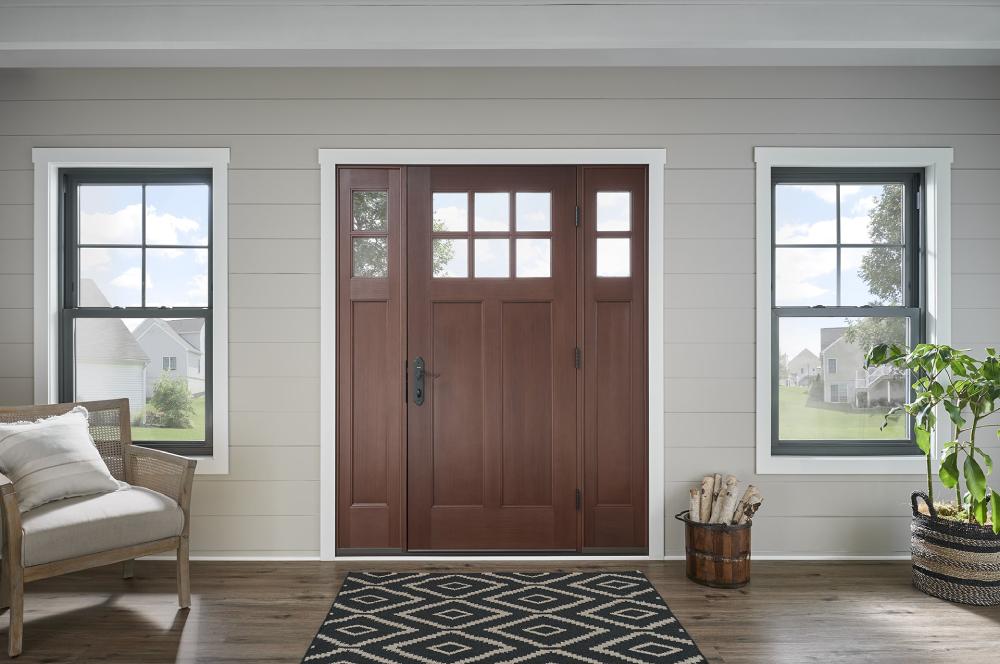
As we mentioned, the main material is only part of what makes a door energy-efficient. The insulation, frame, glass, and weatherstripping all factor into the door’s R-value, U-factor, and overall energy efficiency.
Let’s look at how each of these materials contribute.
Insulation
Your exterior doors should have some form of insulation, even if the doors are made of an already energy-efficient material like fiberglass. We recommend – and use – polyurethane foam insulation. It has a high thermal resistance and relatively high R-value, making it among the most effective door insulation on the market.
Frames
Your door frame is almost as important as the door itself. As you may have guessed, some materials are more energy-efficient and durable than others. Metal door frames are poor insulators and are susceptible to damage and rust. Wooden frames are also subpar at insulating and have their own problems such as rot, termites, and other pests.
At Window World, we install composite frames with each of our doors. Composite is a mixture of different materials, designed to be as durable and energy-efficient as possible. They’ll never rust, rot, dent, or ding.
Energy-Efficient Glass
For doors with a large glass area, making sure it is energy-efficient is important. Installing an insulated fiberglass door without paying attention to the glass inserts can greatly reduce the energy efficiency.
Look for double or triple-paned glass with low-E coatings to ensure you don’t lose any energy savings.
Weatherstripping
Weatherstripping runs along the top, bottom, and sides of your door frame to ensure it is properly sealed against the elements. There are a lot of choices when it comes to weatherstripping, and you can even purchase strips from home improvement stores to add extra protection to your door. The efficacy of these depends on the material, installation, and even the kind of flooring your door opens over.
At Window World, all of our door frames have airtight weatherstripping to ensure your home is protected against the elements.
Energy-Efficient Patio Doors
We’ve talked a lot about energy-efficient entry doors, but what about doors that have a lot of glass space like patio doors and French doors? Is it possible for those to be energy-efficient? Yes!
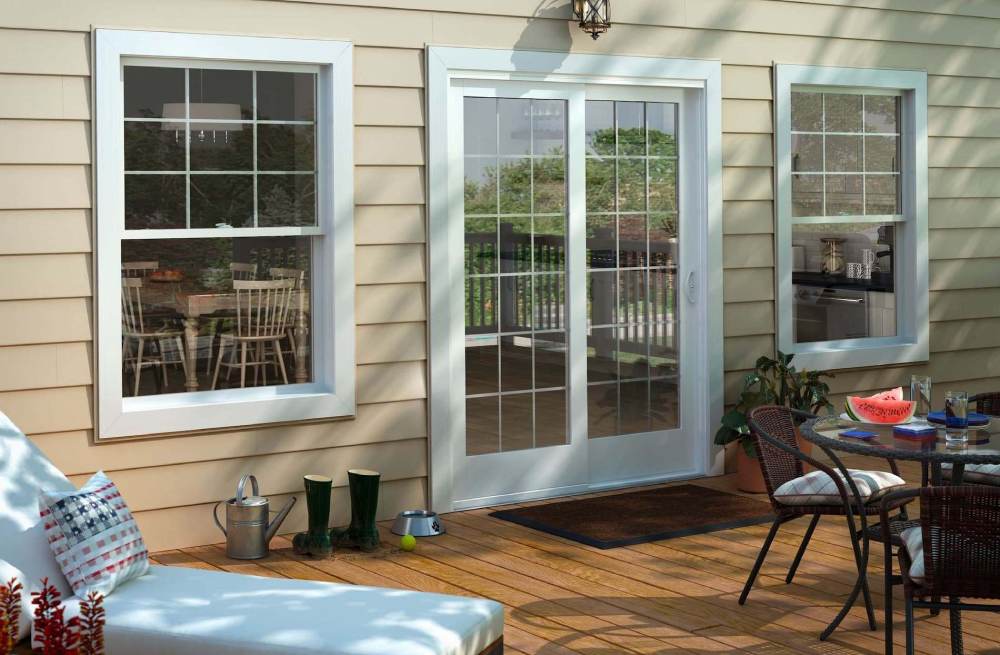
Sliding patio doors and French doors are made energy-efficient by utilizing double-pane glass with an insulator like argon gas between the layers. Vinyl frames and heavy-duty weatherstripping also contribute to their energy efficiency. At Window World, you can be sure that our patio and storm doors are designed to be as durable and energy-saving as possible.
Upgrade Your Doors with Window World
If you’re ready to upgrade your home’s exterior doors to more beautiful, energy-efficient options, make Window World your first choice! From entry doors to sliding patio doors, storm doors to classic French doors, we have just the style you’re looking for! Get started by scheduling your free consultation today!